
From Supporting the Restoration of the State… to Supporting the Survival of Unity Can Saudi Arabia Succeed Where It Previously Failed?
- 2025-12-29 10:52:58
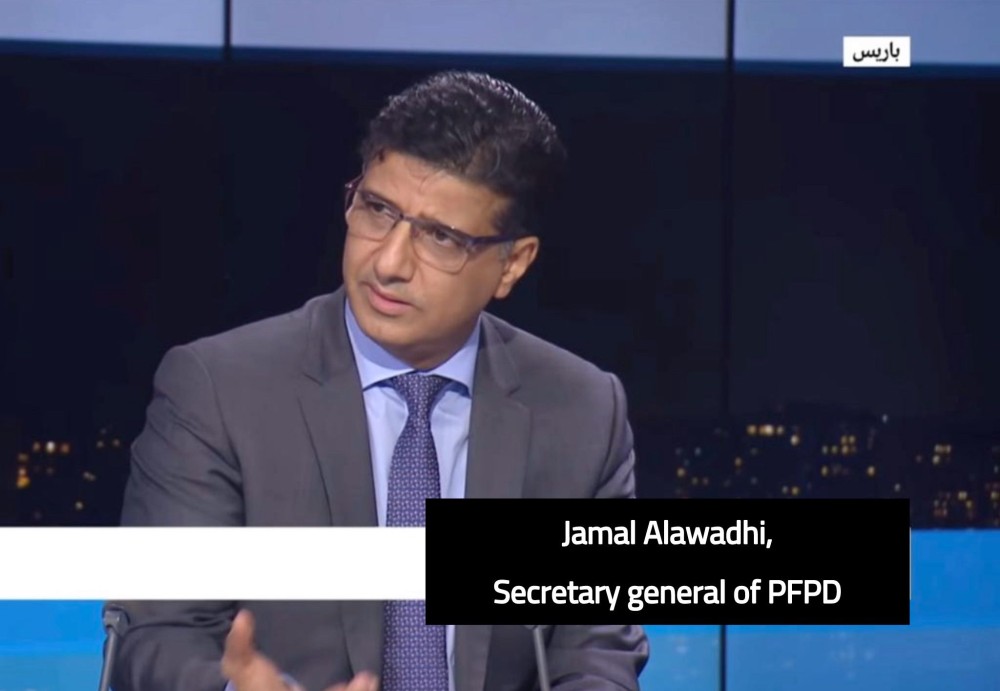
By Jamal Al-Awadhi
Paris- Over the past few days, certain parties have launched a highly charged political and media discourse, marked by excessive rhetoric and deliberate, clear misinformation, attempting to draw misleading comparisons between the demands of Southerners from South Yemen formerly known as the Federation of South Arabia and those of other regions or groups such as Somaliland, the Kurds, and others, under the pretext that major powers have not recognized those entities.
This narrative ignores or deliberately overlooks a decisive historical and legal fact:
South Yemen was a fully sovereign state, a recognized member of the United Nations, and enjoyed broad international recognition following its independence from Britain in 1967.
Here, a fundamental question inevitably arises:
Why did the North not demand the annexation of the South immediately after independence?
If the South, as is claimed today, was an inseparable part of the North, why was this assertion never presented to the international community at that time especially during an era when state borders and political entities were being reshaped through clear international decisions?
The undeniable truth is that two fully sovereign states voluntarily chose to enter into a political union. When it later became evident that this union had failed and had turned into a political, security, and economic burden, as well as a mechanism of exclusion and marginalization the call to return to the preunity status quo does not constitute rebellion or a violation of international legitimacy, but rather represents a legitimate political and legal right, supported by international norms and modern historical precedents.
In this context, one cannot overlook the intensive and exceptional efforts undertaken at the time by Saudi Arabia, particularly the extensive diplomatic moves led by Prince Bandar bin Abdulaziz, then Saudi Ambassador to Washington, in support of demands to restore the pre1990 status of the Southern state.
However, despite the deep and exceptional strategic relationship between Saudi Arabia and the United States, those efforts failed to secure an international decision endorsing the restoration of the Southern state. This reality raises a pressing question today: Have the circumstances changed? Has the balance of interests and alliances shifted?
Moreover, none of the cases often cited in Somalia, Iraq, or elsewhere experienced a phase of being a fully sovereign, internationally recognized independent state, with the sole exception of South Arabia formerly the People’s Democratic Republic of Yemen, whose flag continues to be raised today as a political, historical, and legitimate symbol of a cause that has yet to be closed.
The time has come to put an end to the stream of misinformation and media distortion, and to deal seriously and responsibly with Southern demands for the restoration of their fully sovereign state, while respecting their inalienable right to self determination, free from guardianship, denial, or evasive and inaccurate comparisons.
We fully recognize that the path toward restoration and international recognition is neither short nor easy. It requires time, highlevel coordination, and meticulous political and legal preparation. Yet marginalization, exclusion, and disregard are not options, and will only result in further unifying the Southern ranks, across all political and social spectrums, around a single, unambiguous objective.
The “elder sister” should not confine herself merely to managing the current allied reality in South Yemen. There are growing Western signals and calls advocating for a comprehensive Yemeni political settlement, one that explicitly or implicitly includes the Houthis the real threat to Saudi Arabia’s security and stability as part of a future Yemeni governing authority.
This makes the question more urgent than ever:
Will the concerned parties wait until a solution is imposed from outside, or will they act today to craft a just settlement that acknowledges realities before they harden into an imposed fait accompli without cost or leverage?